October 10, 2011 12:01 PM
Transit Oriented Development
October 10, 2011 12:01 PM
Transit Oriented Development
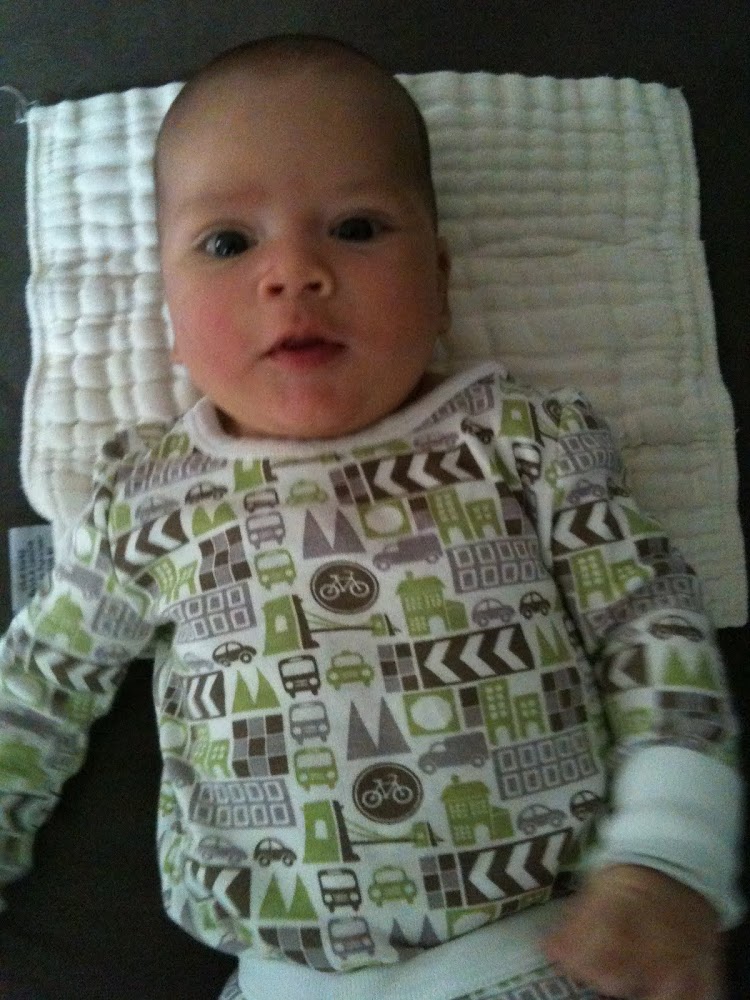
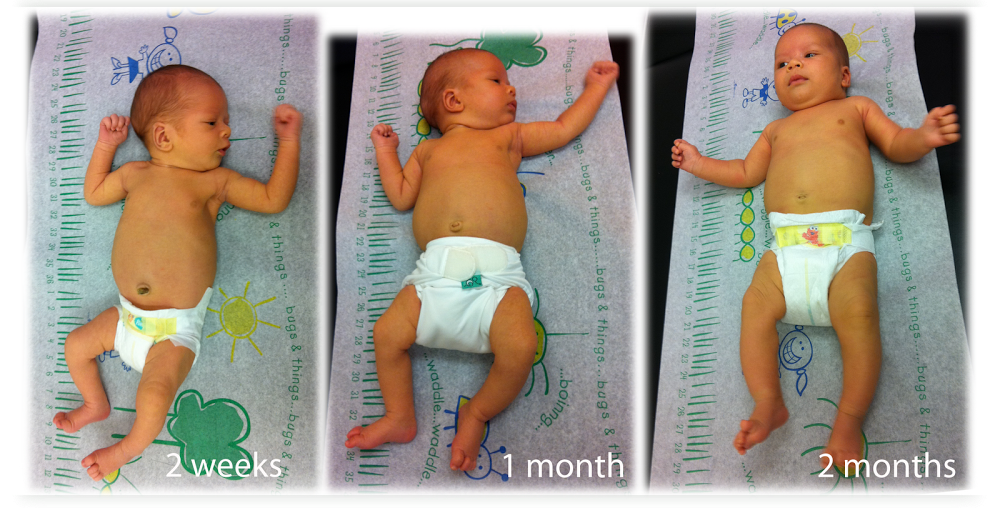
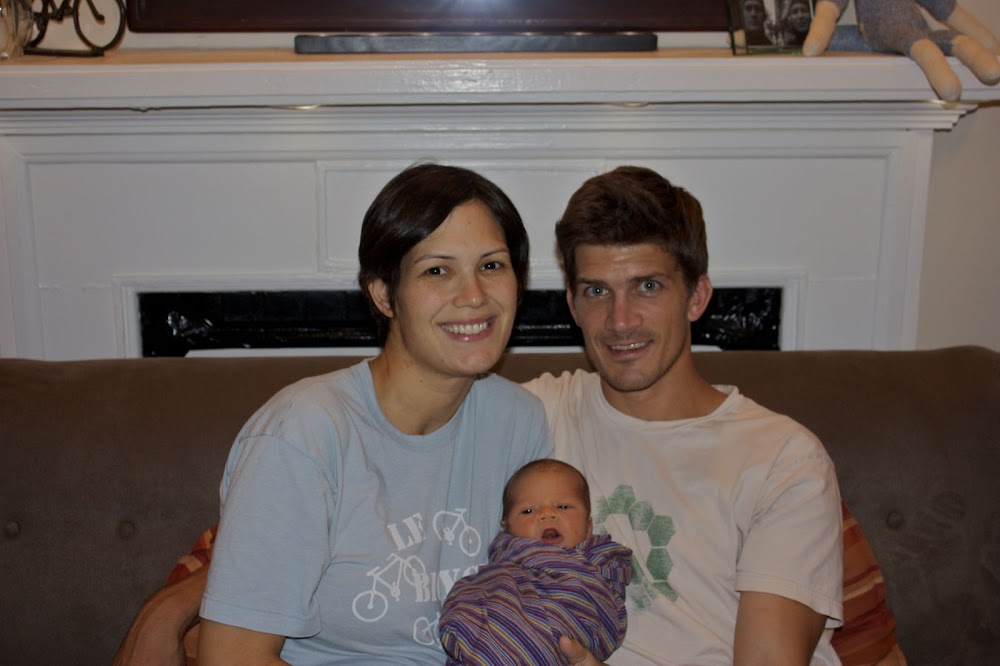
I may seem like all I post about, however infrequently, is now related to having a child. Maybe true, but it really is almost the only thing I have been taking pictures of lately, and today was his 2 month check up. It is so fun to head out to the doctor’s and get some feedback on how the kid is doing. You get to have a special outing with your child, see other parents and kids, and hear super positive things from the doctors. They always make you feel like you are the greatest parent in the world and that everything you are doing is perfect – I think that is half the job with new parents. Lauren and I always try to take the same picture of him now to compare how he looks to the last visit. We also prepare a bunch of questions that we always forget once we get into the exam room. At the 2-month check up you being the vaccine schedule. It is the first time the kid has any reason to associate the doctor’s office with anything bad. They let you nurse while the shots are given which helped to calm him down but must’ve have felt weird for Lauren. There is a lot of screaming and crying, but he settled down pretty quickly and then he and I went to get coffee and a scone which I think cheered him up. Later I got my flu shot and tried to make less of a scene than Benton did with his shots.
I am a dad now, but am still able to be on the laughing end of moments like this (for now).

via smartphOWNED.com
We’re almost a month in now and things are going pretty well. Routines are being developed and we are taking on more activities outside of the house, and we’ve had two grandmas and two aunts visit. Lauren is home until sometime in October and I am getting back into my work schedule.
As we began to think about having a kid, figuring out what to do about child care was immediately an issue. Prior, I had heard of many people staying home with the children for three months and then going back to work. Others decided to resign from their jobs after the initial 3 month leave and stay home with the baby for at least a year. We knew that staying with the child beyond the 3 months is desirable and that the time provided to new mothers we knew just wasn’t enough for them. We assumed we’d have our 3 months to test out for ourselves how comfortable we were heading back to work after that short time. Once we started looking into our options with Lauren’s employer, the CDC, we were surprised to find out that we might have even less time before we had to send Ben off to daycare. The CDC, an agency whose responsibilities include promoting maternal and child health, does not, however offer paid maternity leave. Employees must instead use their saved holiday and sick leave to be paid while taking care of new infants. Sick leave can also be donated from other employees for days in the first few months. This is not uncommon in the US, but is noticeably different than many other countries in the world. The US has very short mandated leave for new mothers and is last in terms of paid leave.
 But if you can’t count on the national agency for health to advocate for the types of entitlements that almost no one can disagree with, who can you count on? Oddly, the answer seems to be Fox News. I love that this sort of pro-social program banter is coming out of their camp. Maternity leave, dare I say healthcare, for all.
http://www.hulu.com/embed/Gv5cnVPUttI2495yq2ArLA/i117
This is from a recent story on the AP:
NEW YORK (AP) — Americans often take pride in ways their nation differs from others. But one distinction — lack of a nationwide policy of paid maternity leave — is cited in a new report as an embarrassment that could be redressed at low cost and without harm to employers
“Despite its enthusiasm about ‘family values,’ the U.S. is decades behind other countries in ensuring the well-being of working families,” said Janet Walsh, deputy director of the women’s rights division of Human Rights Watch. “Being an outlier is nothing to be proud of in a case like this.”
Human Rights Watch, based in New York, focuses most of its investigations on abuses abroad. But on Wednesday, with release of a report by Walsh on work/family policies in the U.S., it takes the relatively unusual step of critiquing a phenomenon affecting tens of millions of Americans.
The report, “Failing its Families,” says at least 178 countries have national laws guaranteeing paid leave for new mothers, while the handful of exceptions include the U.S., Swaziland and Papua New Guinea. More than 50 nations, including most Western countries, also guarantee paid leave for new fathers.
Past efforts in Congress to enact a paid family leave law have floundered, drawing opposition from business lobbyists who say it would be a burden on employers.
Instead, there is the 1993 Family and Medical Leave Act, which enables workers with new children or seriously ill family members to take up to 12 weeks of unpaid leave. By excluding companies with fewer than 50 employees, it covers only about half the work force, and many who are covered cannot afford to take unpaid leave.
“Leaving paid leave to the whim of employers means millions of workers are left out, especially low-income workers who may need it most,” said Walsh, citing federal estimates that only 10 percent of private-sector workers have paid family leave benefits.
With prospects for federal legislation considered dim for now, advocates of family-friendly workplace policies hope for progress at the state level and are looking closely at California and New Jersey, the only states that have paid-leave programs.
Both states have severe budget problems overall, but the leave programs — financed entirely through small payroll tax contributions by workers — are flourishing. Both offer six weeks of paid leave for workers taking time off to bond with a new child or to care for a seriously ill child, spouse or parent.
Human Rights Watch, which interviewed dozens of parents for its report, said lack of paid leave has numerous harmful consequences — fueling postpartum depression, causing mothers to give up breast-feeding early, forcing some families into debt or onto welfare.
Cathy Frazier of Mendota Heights, Minn., and her husband, Joe, believe that her severe bout of postpartum depression could have been avoided or at least eased if he had been able to take paid leave after the birth of their son six years ago.
The boy was born two months early, spent five weeks in the hospital, and remained in frail health after he went home. The couple said Cathy had to provide most of his care single-handedly while Joe was working long hours at a local public-access TV station.
“If Joe had been around, it would have been better,” Cathy Frazier said in a telephone interview. “I might have gotten sick, but not like I was.”
The depression was so severe that she was hospitalized for a week, and went into debt paying for therapy with a credit card because her insurance didn’t cover it. Six years later, she said she still struggles with depression, taking medication and unsure about her prospects for accepting any job that would involve working outside her home.
Conversely, Jennifer Shankman of Malibu, Calif., was grateful to benefit from her state’s paid leave program, which helped her take off a total of five months — three paid, two unpaid — after her son was born in September.
“It helped me to not feel as stressed,” said Shankman, who’s now back at work as a youth camp director. “It made a big difference mentally.”
The Human Rights Watch report urges other states to emulate New Jersey and California by adopting paid leave programs. Any takers might get federal help — the Obama administration, in its recent budget proposal, proposed allocating $23 million to help states with startup costs for such initiatives.
One possible beneficiary could be Washington state. A paid leave measure was passed by lawmakers there in 2007, but never implemented due to lack of funding.
New Jersey’s program started in July 2009 and its balance as of Dec. 31 was $39 million — robust enough so the state recently reduced workers’ contribution by half. The maximum annual payment is now less than $18 instead of more than $35.
Through December, New Jersey had approved 44,972 claims — 91 percent of those filed — and paid out $105 million in benefits at an average of $471 a week.
California’s program began in 2004 and is run by the State Disability Insurance plan, which collects 1.1 percent of pay from 13 million eligible workers. In 2009-10, the state paid out $469 million for 180,675 claims, with an average weekly benefit of $488.
In New Jersey, men make up about 12 percent of the parents seeking paid leave to bond with a new child. In California, men’s share of the leave has risen from 17 percent to 26 percent since 2004.
In each state, some business leaders remain unenthusiastic, though there is no clamor to repeal the programs.
Michael Egenton, senior vice president of New Jersey Chamber of Commerce, said the impact had been relatively modest thus far. He attributed this to the recession and the desire of most workers to take paid leave only after conferring with their bosses to ensure the absence wouldn’t be disruptive.
“With the tough economy, people are feeling, ‘I’m glad I have a job,'” he said. “We’ll be interested in seeing where the program goes when the economy improves.”
In California, Chamber of Commerce policy advocate Jennifer Barrera said the leave program — combined with other policies — “creates a significant administrative burden on employers, increases costs, and minimizes the ability of companies to expand hiring and create new jobs.”
However, Eileen Appelbaum of the Center for Economic and Policy Research, a liberal Washington think tank, said she and a colleague reached a different conclusion in a recent survey of 235 California businesses. She said the vast majority of employers found the leave program had a positive or neutral effect on productivity, profitability, turnover and worker morale.
Appelbaum contended that business associations, rather than individual employers, were the main obstacle to paid-leave proposals in Congress and state legislatures.
“Employer associations in other countries help their companies be successful,” she said. “In this country, employer associations largely exist to resist anything that might be good for workers.”
In the European Union, paid parental leave varies from 14 weeks in Malta to 16 months in Sweden, which reserves at least two months of its leave exclusively for fathers. Most EU countries have maintained the provisions of their programs despite the recession.
Ellen Bravo of the Family Values at Work Consortium, a 15-state network working for family-friendly policies, said the bid to expand paid leave in the U.S. was hampered by the clout of corporate lobbyists and the relatively weak status of the labor movement.
“Family values often end at the workplace door,” she said. “What we’re fighting for isn’t just modest — it’s meager compared to what other countries have.”

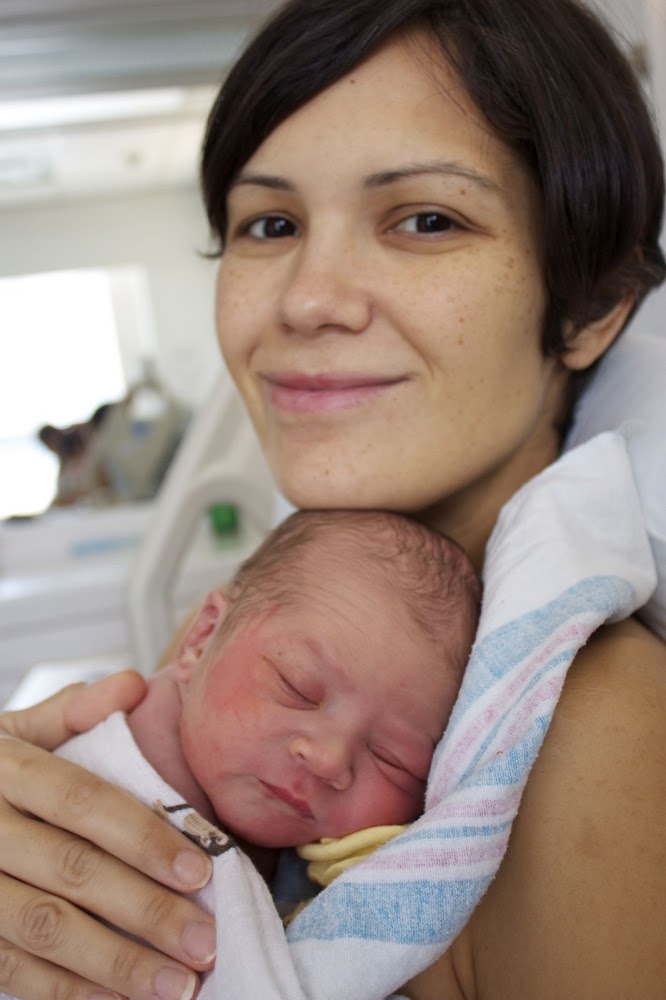
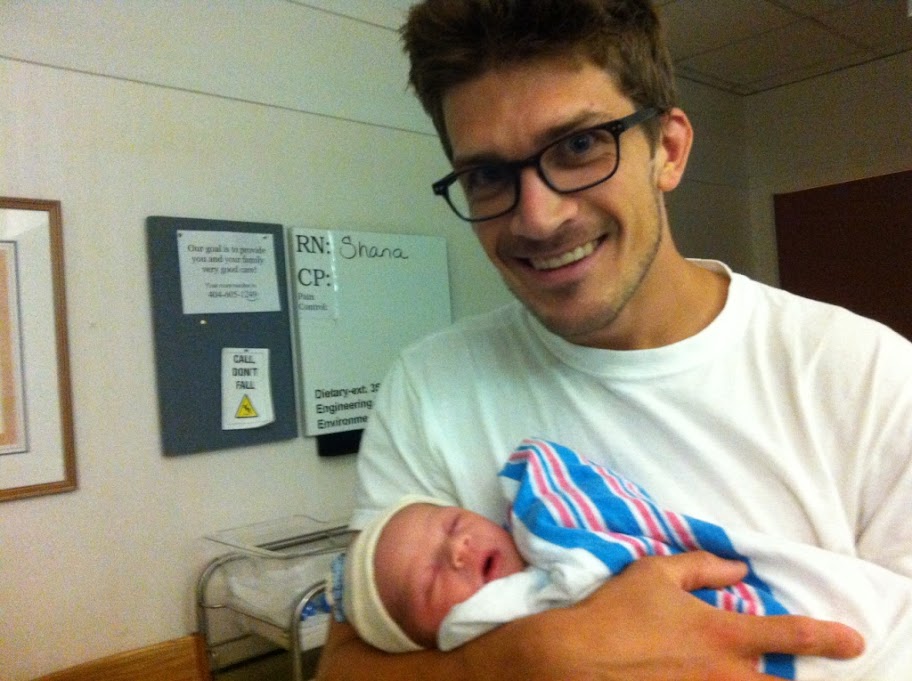
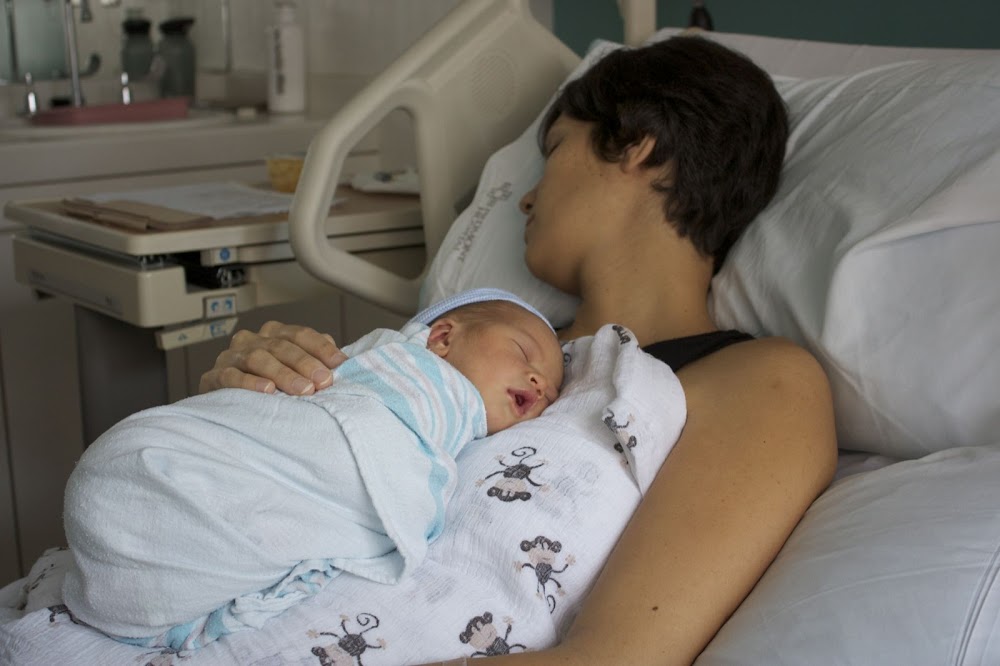
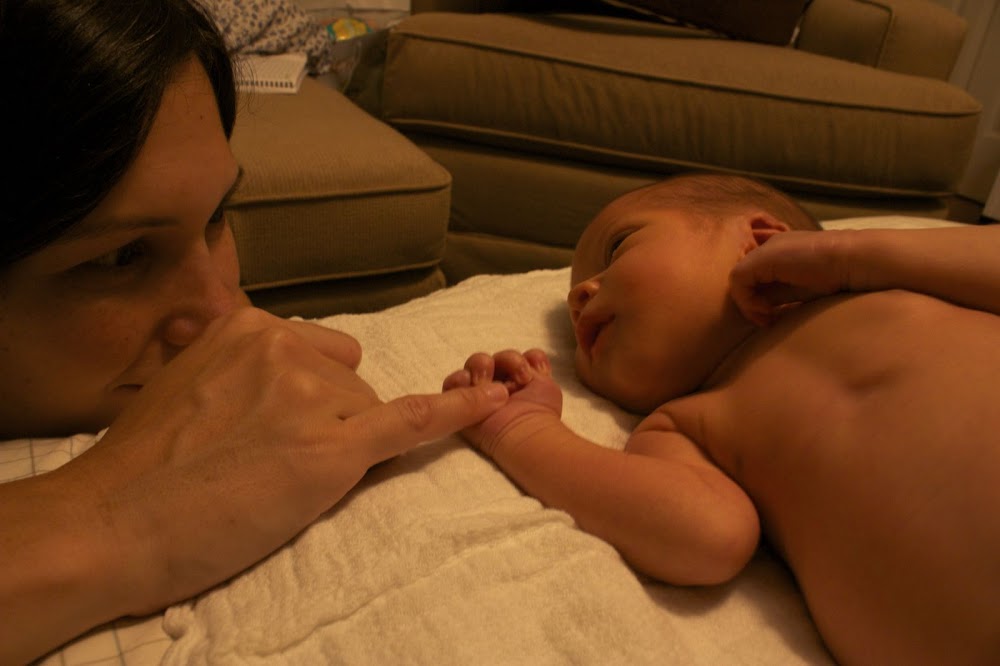
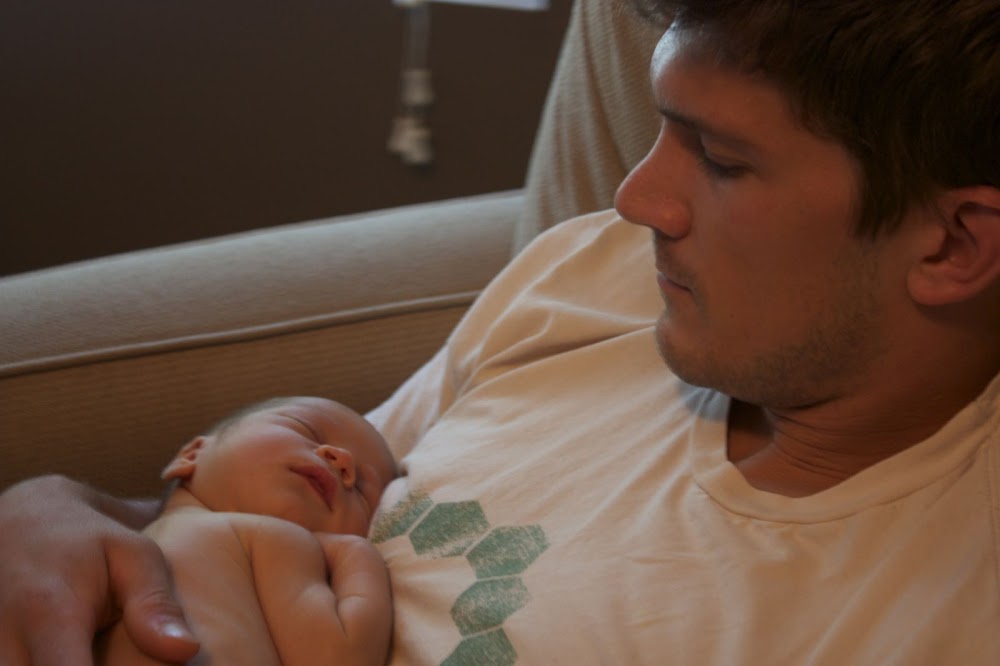

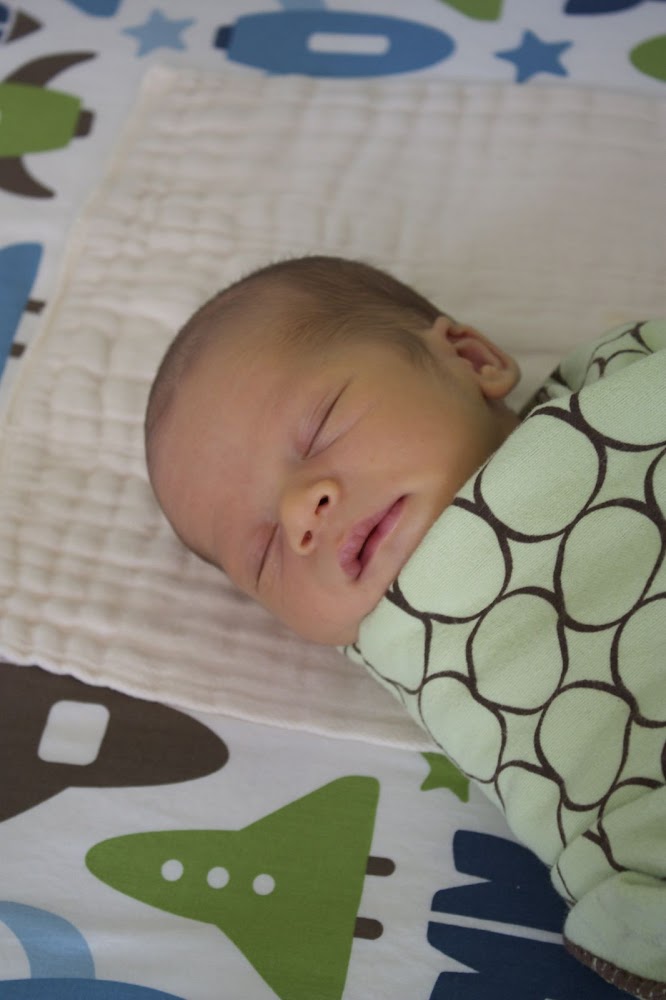
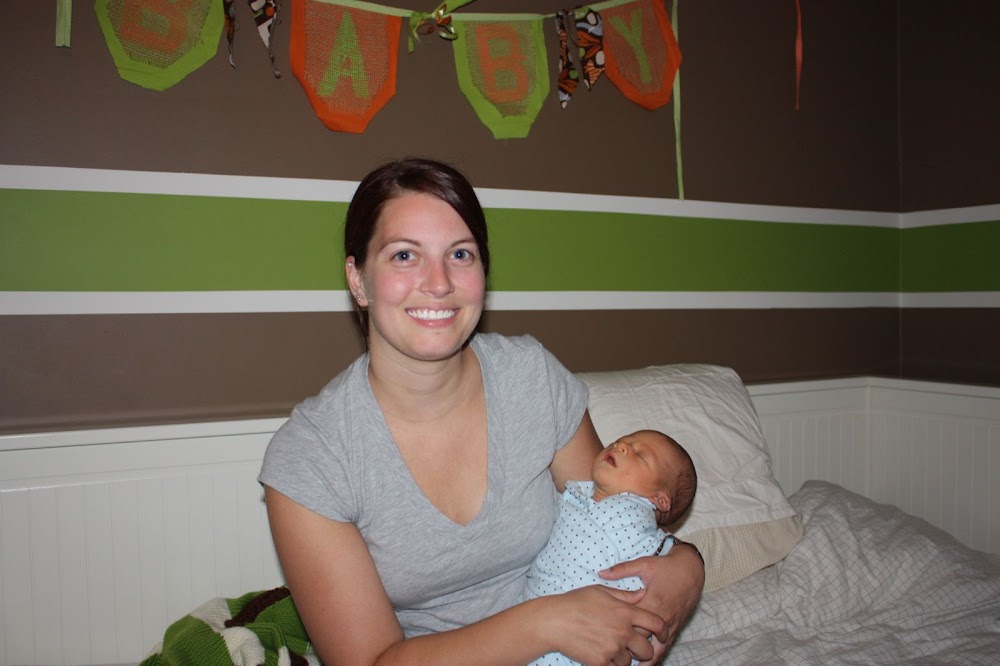

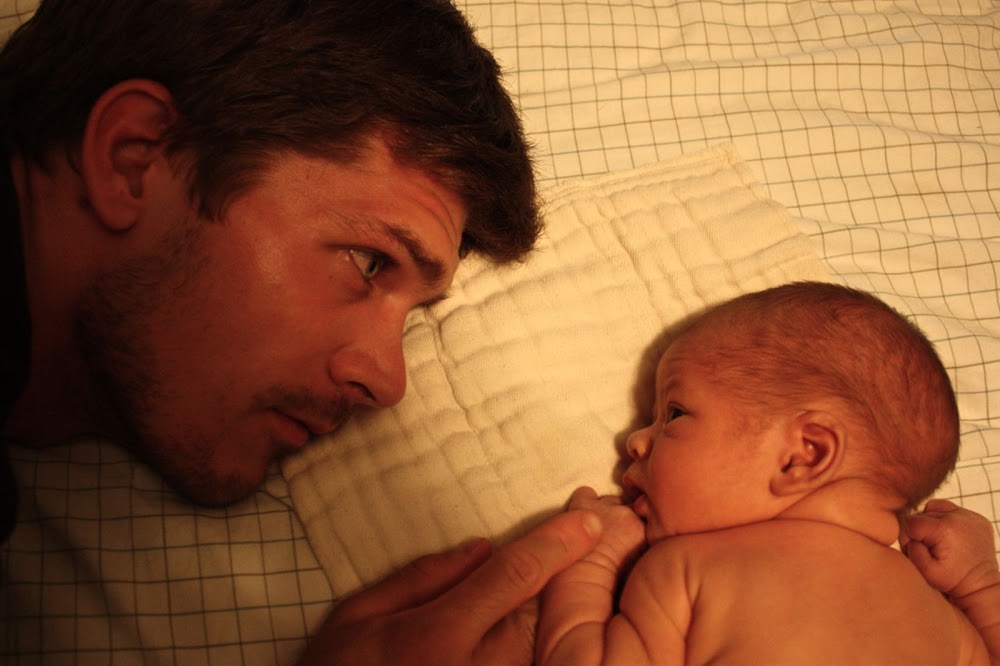
My apologies for the delay in getting the news out through this avenue but many of you have already heard – Benton Gray Vargo was born on July 20, 2011. He was a healthy 8lbs 9oz.
For months, and especially for the last few weeks of the pregnancy I had been waiting anxiously and wondering always “what is next?” “how does this go down?” I began to find out just after 5pm on a Tuesday when Lauren’s water broke. We ran out to stock up on pet food and ate our own dinner before heading to the hospital around 10:30 that night. If the water breaks before full fledged labor, most hospitals will put you on a pseudo-clock since the risk of infection goes up once the membranes have ruptured. We hesitated to go to the hospital to see if she could labor at home and hopefully progress a bit before going there and hearing that we needed pitocin to move things along. At the hospital they let us walk laps around the ward to try and get things going but contractions stayed about 6-8 minutes apart. By the morning (15 hours from water breakage) they wanted us to take steps to move it along. This means starting a steady dose of pitocin to move the contractions closer together with greater regularity. We worked at this for about 5 hours, trying all kinds of different breathing and poses and shifting weight and listening to some relaxation sounds Lauren has on her iPhone.
When the doctor came in around 1pm Wednesday, we found out that there was no noticeable progress in her dilation. This news completely deflated us. Lauren had been working so hard through painful contractions and the news that the last 5 hours had yielded no reward was crushing. We were now about 20 hours past the water breaking and no closer to the end goal. The decision to get the epidural was not an easy one. There are all manner of sources of information for how you should go through your delivery out there and many pivot around the subject of the medical intervention and, in particular, the epidural. It’s gets a lot of attention and it was so difficult because it came with a fair bit of uncertainty. Would this slow down Lauren’s progress even further? Would she even know what was going on during the whole thing? Would she be miserable? After hooking up the epidural, the every-3-minute contractions came and went with little fanfare. This continued for about 4 hours. Lauren got to relax a bit if that’s possible, and for the first time since arriving at the hospital I found myself once again full of worry and curious anticipation about how the whole thing was going to go down from here on out.
The doctor finally came in around 6pm and upon inspection found everything in its right place, so to speak. We were about 25 hours past the water breaking and we were in a position to start pushing. This was the best news we could have hoped for. We were done with the active labor, we were going to proceed without needed further intervention or surgery and we were finally going to have a child after all this waiting. The doctor promptly left to finish his rounds and the nurse prepped Lauren for pushing. I think she could sense our excitement at this latest development and tried to temper it by mentioning that, on average, the pushing phase for first time births last 2 hours. She walked Lauren through how to push and breathe together – 3 pushes per contraction and after two contractions she was calling for more nurses to set up the tables and get he doctor back in there. The whole pushing phase lasted about 20 minutes and Benton was born. I was able to be present for the whole thing and everyone did a great job. Lauren even got to complete the birth by reaching down and pulling Benton out and onto her chest. This part of the birth, blew my mind and is still my favorite part. It exceeded all of the expectations I had for our experience. One nurse said to us that we did this whole delivery thing backward with the water breaking and the labor, but if anything is clear after the process it is that there is no standard for what happens next, or how it goes down.
The rest of our time in the hospital was great. You’re running on a great high and you seem to roll with whatever gets thrown at you. I was impressed by the size and complexity of hospital operations. If you don’t spend much time in them you forget how amazing they are. The nurses are also great. You get to know them and you feel like you’re in good hands. When you leave you feel like they are going to miss you but it is probably more of a one way street. They do it all again the next day or with the next patient.
Now we’ve been home for just over a week. He sleeps and eats well but we have not gotten as much sleep as we should because we just stare at him most of the time. Thanks to everyone for their support and thoughts as we’ve progressed through this. We are all loving it right now. No one is really thinking about what is next or worrying about how the next step happens, we’re just enjoying this now.
I’m always looking for new bike helmet technology. I’m conflicted by wanting to be safe and at the same time longing for the comfort and freedom that riding without a helmet offers. That’s why I’m very excited to present these innovations in head protection technology.
First, there is this little number inspired by armadillos. It can be stored and carried flat, and is also very cheap and easy to manufacture. There is not much info on the site about how well it protects your head.
Next there’s the cardboard bike helmet. This option is lightweight, and easy to manufacture as well. It can also be custom made to fit a specific person’s head. This helmet has been tested and been shown to stronger and more durable after crashes than current standard fare for helmets. The ease of manufacturing and the availability of materials could make these helmets super cheap and make them widely accessible to people who want to ride their bike safely.
Finally, there is this high-fashion bicycle air bag that is worn as a stylish Scandinavian collar. This one makes me a bit nervous but I like where their going with it. This option allows you to ride without the heat and cumbersome bulk of the helmet but still provides protection in the event of a fall. I am not sure if the technology is proven to some standard yet, but the video shows several crash tests performed with the ‘helmet.’ This option is also sure to be among the most expensive for bicycle protection and is unlikely to show up on the Tour de France anytime soon.
Now I know there are those purists out there who refuse to wear a helmet. I once shouted out to one colleague who works on healthy cities and rides regularly without a helmet, “where’s your helmet?” To which she replied, “I did a literature review and found that they don’t help you.” Did she actually do the lit review? I don’t know but this prompted me to do a little investigating of my own. This study from the New England Journal of Medicine concluded that helmets were highly effective in preventing head injury. In another paper which reviewed several studies examining the effectiveness and protectiveness of helmets this was the author’s conclusion – “Helmets reduce bicycle-related head and facial injuries for bicyclists of all ages involved in all types of crashes including those involving motor vehicles.” Similarly this review of several peer-reviewed studies also found that “the evidence is clear that bicycle helmets prevent serious injury and even death.“
http://www.hulu.com/embed/-7lOIjwkmVh1iEBPnBqx-A/259/589/i455
This coloring book is ridiculous but makes me think about what kinds of coloring books I could get behind, or make. Remember Captain Planet? Here are a couple environmental resources for kids.
EPA Environmental Kids Club
Clean Air Campaign Clean Air Kids
NRDC’s Environmental Links for Kids
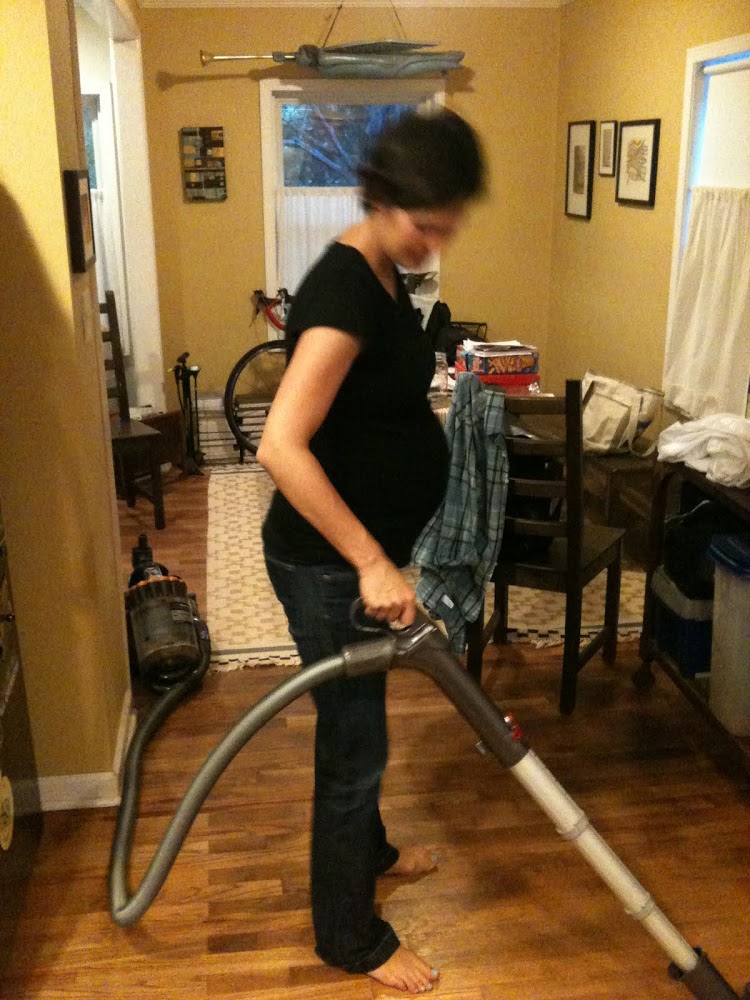
From Wikipedia, the free encyclopedia
“Barefoot and pregnant” is a phrase most commonly associated with the controversial idea that women should not work outside the home and should have many children during their reproductive years. It has several other meanings as well. It is a figure of speech.
The phrase “barefoot and pregnant” was probably first used sometime in the late 1940s. An article from 1949 states, “By early 1949, TWA was—in the words of its new president, Ralph S. Damon—both ‘barefoot and pregnant.'” Its usage may date as early as the 1910’s. An article published in 1958 states the phrase was first used by a “Dr. Hertzler” 40 years earlier. “Some forty years ago, Dr. Hertzler advanced a hypothesis which young women of today seem bent on proving correct. ‘The only way to keep a woman happy,’ he said, ‘is to keep her barefoot and pregnant.'”
[edit]Negative connotations
A common assumption is that the expression relates to housewives not leaving the home, and thus not needing shoes. Indeed in the sex discrimination case of Volovsek v. Wisconsin Dept. of Agric., No. 02-2074 (7th Cir. September 18, 2003), the United States Court of Appeals for the Seventh Circuit ruled that a woman who allegedly overheard her manager using the phrase could take her case to a jury. However, the court also dismissed the remaining claims on summary judgment with respect to both discrimination and retaliation against DATCP for lack of evidence.
Feminists often cite the phrase in a negative context.
The Philadelphia chapter of the National Organization for Women annually awards a Barefoot and Pregnant Award “to persons in the community who have done the most to perpetuate outmoded images of women and who have refused to recognize that women are, in fact, human beings.”
Shinine Antony wrote a collection of short stories entitled Barefoot and Pregnant and later said in a 2002 interview, “Barefoot And Pregnant is a phrase that pokes fun at chauvinists who want their women barefoot (so that they are unable to socialize) and pregnant (helpless). This follows the general image of society in which women are merely objects.”
Some feminists associate “barefoot and pregnant in the kitchen” with the phrase “Kinder, Küche, Kirche” (translated “children, kitchen, church”), which the Germans under the German Empire and later used to describe a woman’s role in society. In Asian society, the equivalent phrase is, “good wives and wise mothers” (originally popularized in Meiji Japan).
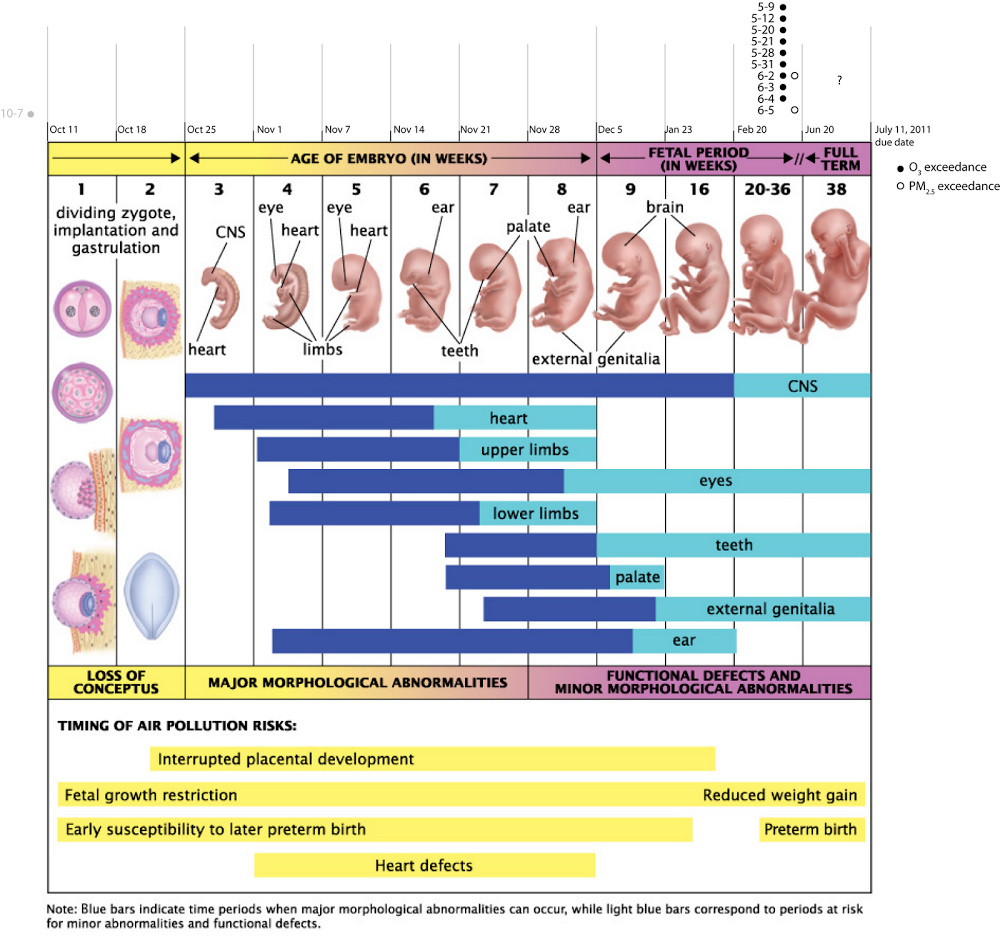
As the summer wears on, the poor air quality days are beginning to happen, and in succession. We’re currently in a long stretch of code orange smog alert days, which are forecasts of the air quality and do not actually represent an ‘exceedance’ under the Nation Ambient Air Quality Standards. With a baby on the way I am interested in how seasonal air quality affects development. I have superimposed our own pregnancy calendar and regional air quality onto the fetal development and air quality interaction chart from UCLA Institute of the Environment and Sustainability. I think that the chart may be more applicable to serious air quality concerns such as indoor smoke, but the exercise may still be interesting.
Perhaps I started this a bit early, with more bad air quality days on the way before the birth, but I will continue to keep it updated – including development outside the womb. For the results so far, it looks like we’ve avoided some of the more serious fetal development effects and now could run into some delayed weight gain. Looking ahead for the summer we’ll likely see more ozone days in the first few months of this little guy’s existence.
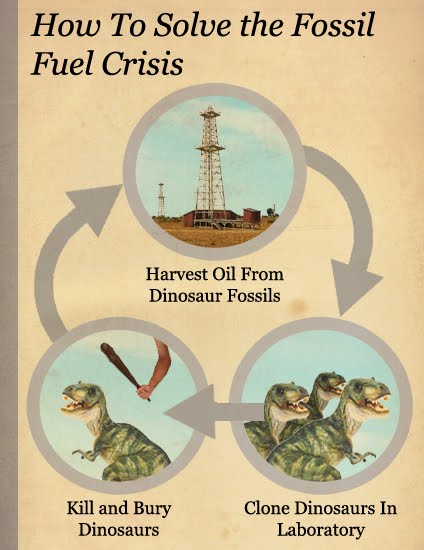
Energy problems solved by Fake Science
 VARGOCITY